Visibility gap
Patients often compensate unknowingly with incorrect movements. Therapists usually only notice this during the next appointment.
Design of an interactive digital-twin platform for Reade that helps therapists support patients during remote rehabilitation.
In collaboration with




01The challenge
Stroke rehabilitation is increasingly shifting from the clinic to the home. Guided home exercises work and can be just as effective as clinical therapy, yet this shift creates a visibility gap: therapists can no longer see how a patient moves, and wearables generate far more data than a therapist can process.
A digital twin offers a solution: a virtual model of the patient that brings sensor data, self-reported input and home context together in one clear overview. My thesis investigated:
How can an interactive digital twin be designed to support rehabilitation professionals in understanding patient progress and giving feedback in remote rehabilitation?
02Research
I interviewed seven physiotherapists from Reade's inpatient and outpatient teams. In semi-structured conversations, we discussed their daily workflow, remote care, the digital tools they use and what they are still missing.
Patients often compensate unknowingly with incorrect movements. Therapists usually only notice this during the next appointment.
Due to their packed schedules, therapists reject tools that create a separate 'shadow file'. They need clear summaries they can quickly review between two appointments.
A skipped exercise can point to fatigue, a busy day or simply forgetfulness. Objective sensor data only gains real value when combined with how the patient feels.
I translated these insights into eight functional requirements, ranging from automatic pre-session summaries to flagging compensatory movements. Integration with the electronic patient record fell out of scope and was not included in the design.
03Process
I designed three dashboard concepts, each with a different information density, and evaluated them. This led to a clear layout structure.
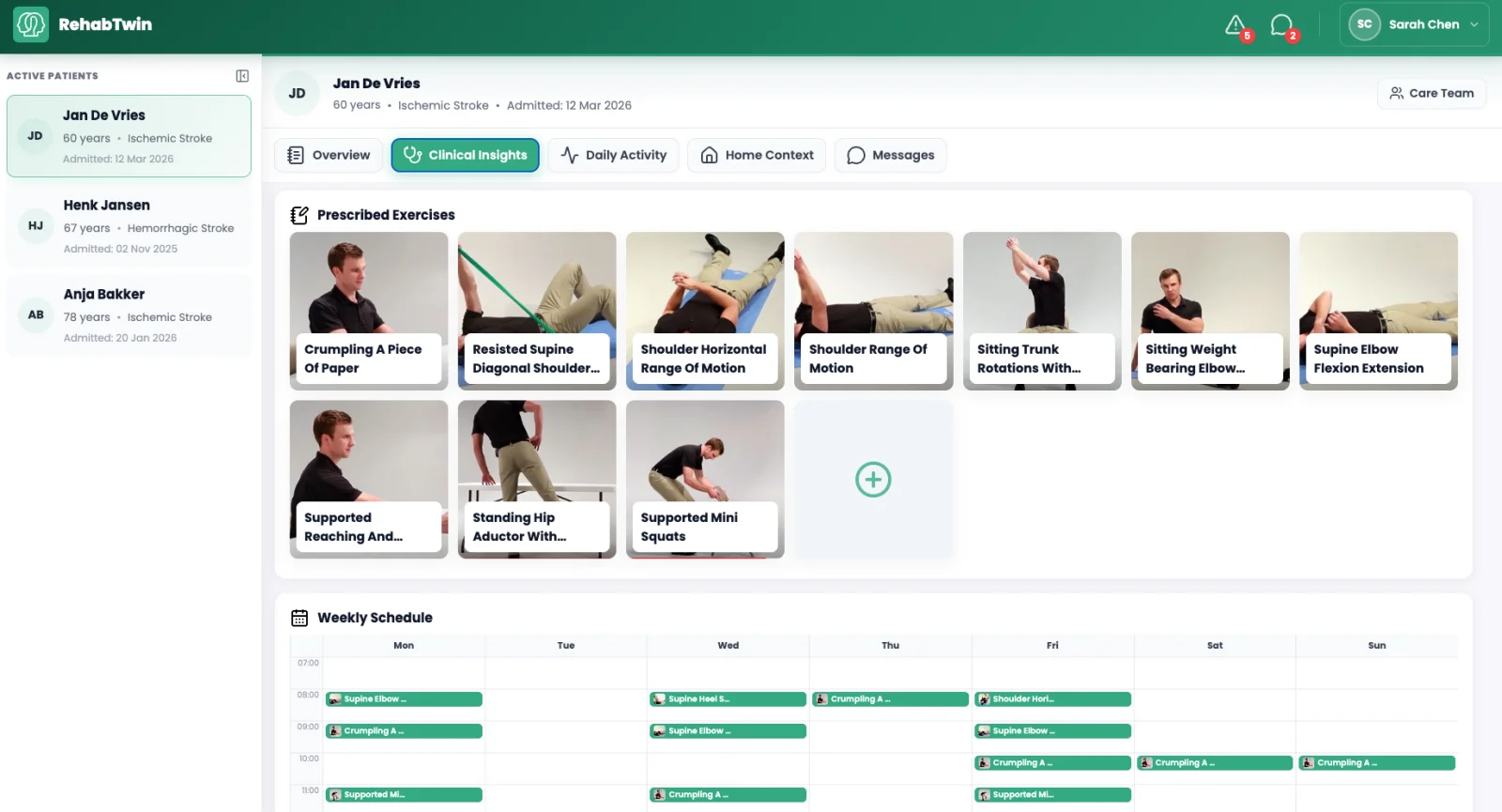
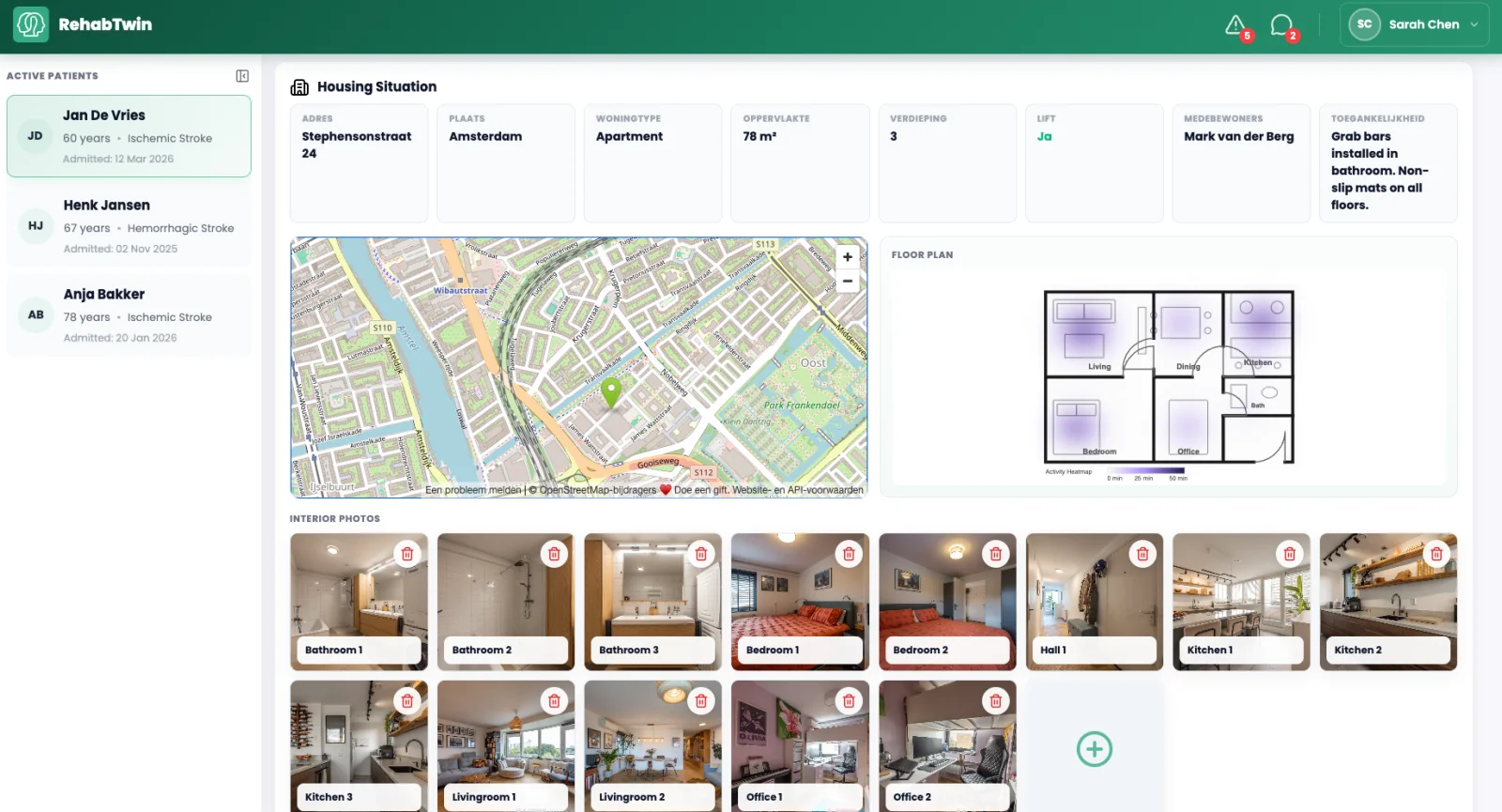
I developed the screens into a clickable prototype and refined the visualisations based on feedback. This made the data clearer, added editable exercises and visually mapped out the home context.
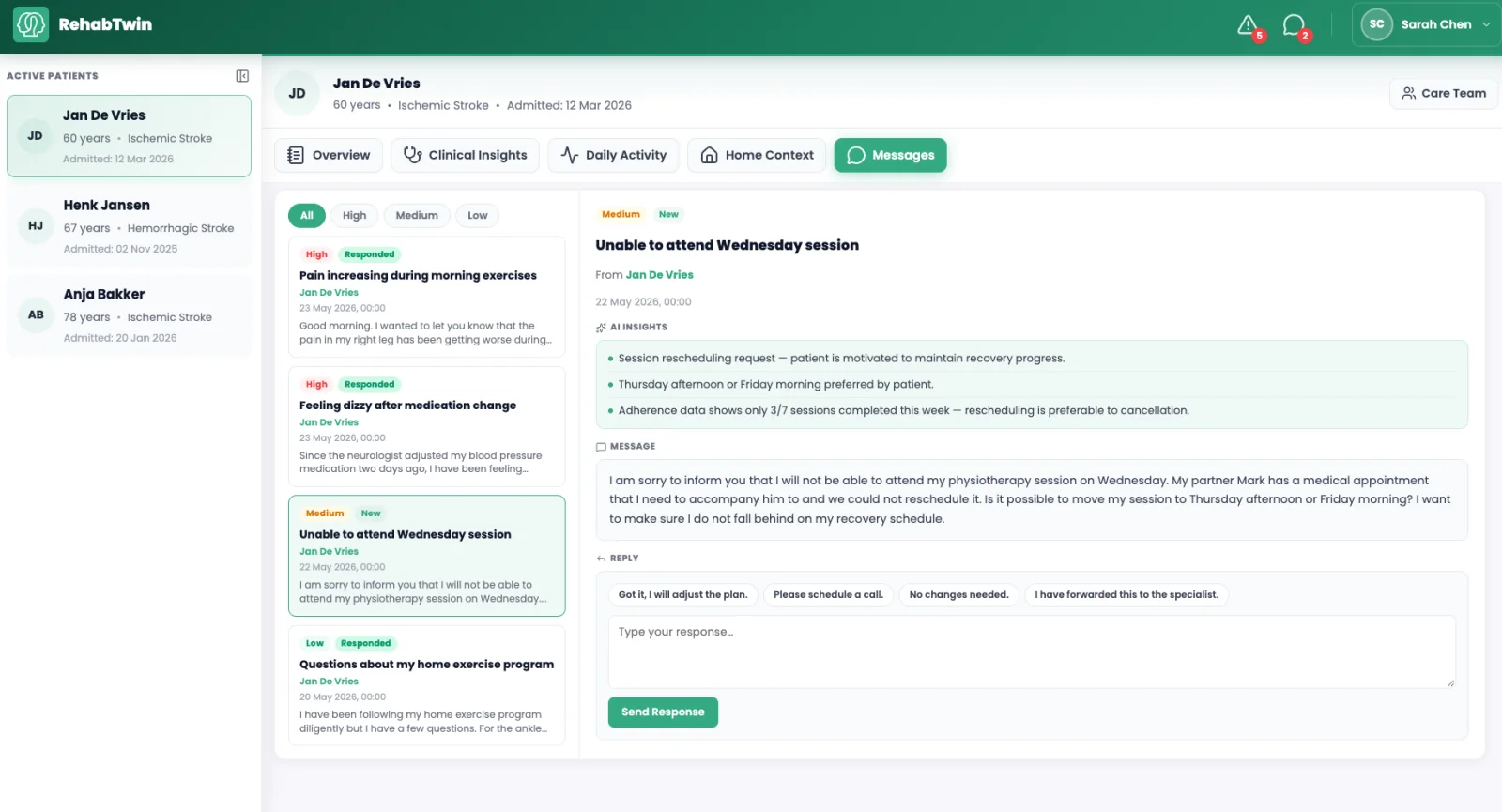
I built the final prototype as a working web app that brings together patient data, AI insights and clinical notes, ready to test with Reade's therapists.
04The design
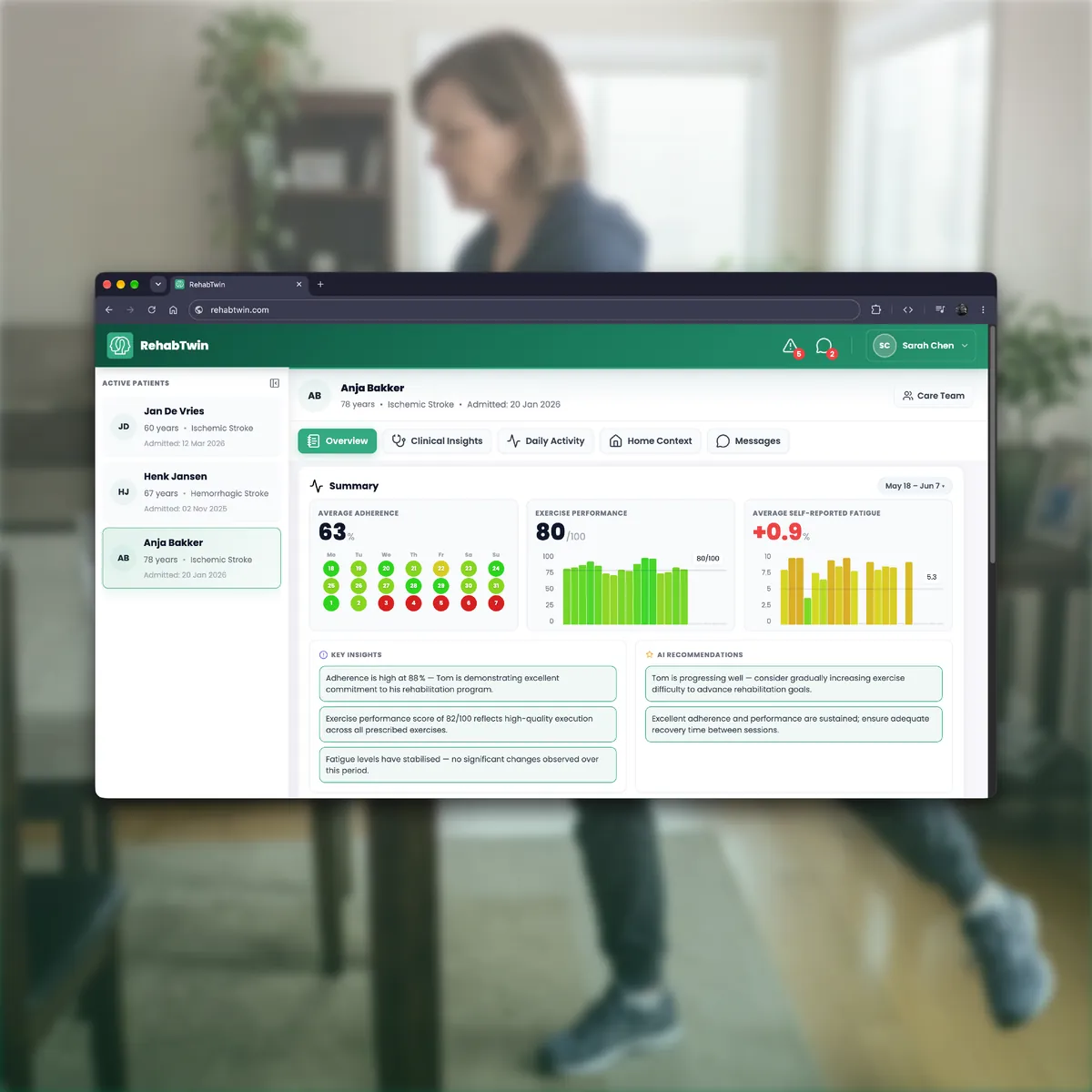
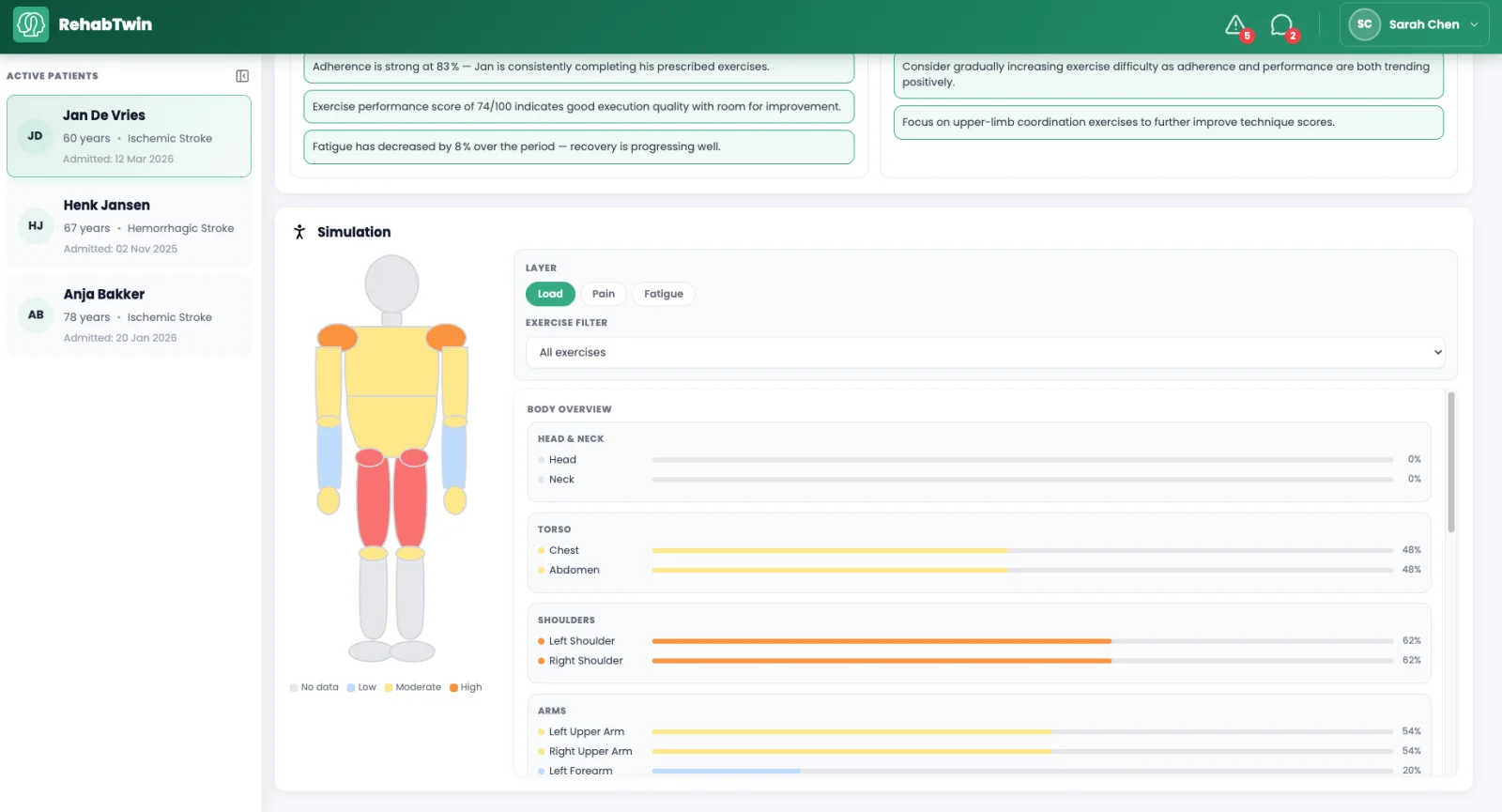
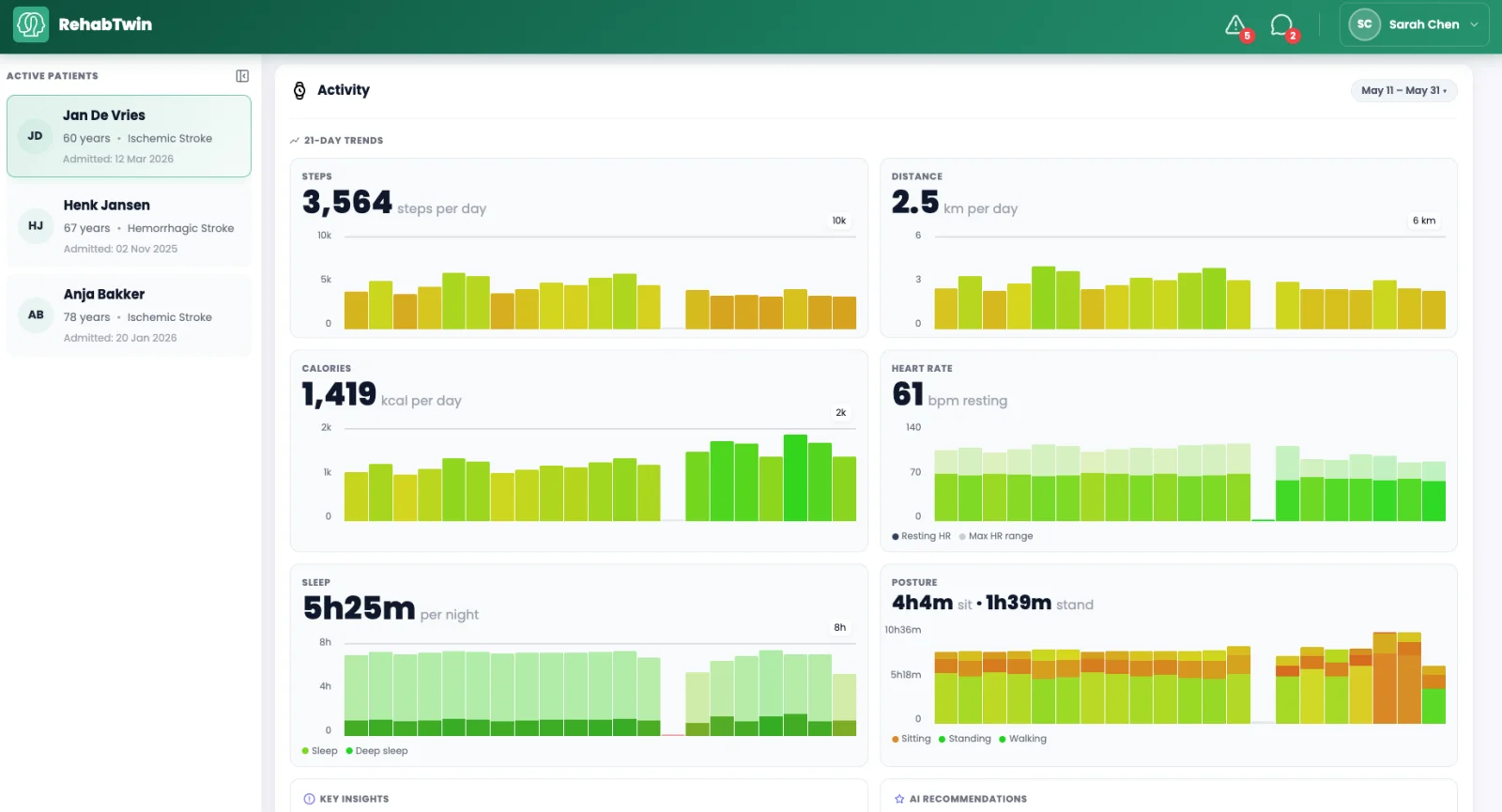
RehabTwin opens with a 7-day summary that lets therapists prepare for a session in one minute. The sidebar gives direct access to all patients, while alerts and messages are always ready in the top bar.
05Evaluation
Three physiotherapists from Reade worked through realistic tasks in every module of the web application while thinking aloud. This was followed by an interview on usability, trust in AI and alignment with their daily work.
06Key learnings
Show only the changes that truly matter, so a therapist can prepare quickly between two appointments.
Every AI suggestion must be verifiable, for instance via a video with a timeline. The therapist always stays in control.
Start with a clear overview and let users click through to details only when they need them.
Missed exercises take on a completely different meaning when you can see the patient was exhausted that day.
A tool that creates a second record will not be used in practice, no matter how good the design is.